Southeastern regional
mathematical string theory meeting
This is the webpage for the southeastern regional mathematical string theory
meeting, held every six months (early April and early October), often at
Duke University but occasionally elsewhere.
Next meeting:
The next meeting will be this spring on Saturday March 30, 2024
at UNC-CH in Chapel Hill, NC.
Speakers tentatively include Fei Yan (Brookhaven),
Victoria Martin (University of North Florida),
Diego Delmastro (Stony Brook), Xingyang Yu (VT).
Talks will be in Chapman Hall room 125.
Tentative schedule:
- Friday March 29: Optional informal dinner, starting at 7 pm, at
Crossroads restaurant in the Carolina Inn,
211 Pittsboro Street (across the street from the physics building),
Chapel Hill. If you want to join us, please RSVP Eric Sharpe by
Wed March 27 at noon, so that a suitable reservation can be made.
- Saturday March 30: All talks will be in Chapman Hall room 125.
- 9:30 - 10:30: Fei Yan (Brookhaven),
"On symmetry-resolved generalized entropy"
- Abstract: Symmetry plays an important role in the analysis of physical systems. In recent years, the study of symmetries has intertwined with another crucial topic, namely quantum entanglement. Symmetry-resolution of quantum entanglement, which roughly speaking boils down to the study of quantum entanglement within a given symmetry charge sector, not only has theoretical interests but can also be probed experimentally. In this talk, I will start with a general review of the subject. I will then briefly sketch a computational framework suitable for studying the dynamical evolution of symmetry-resolution (for example after a global quantum quench), using the notion of symmetry-resolved generalized entropy.
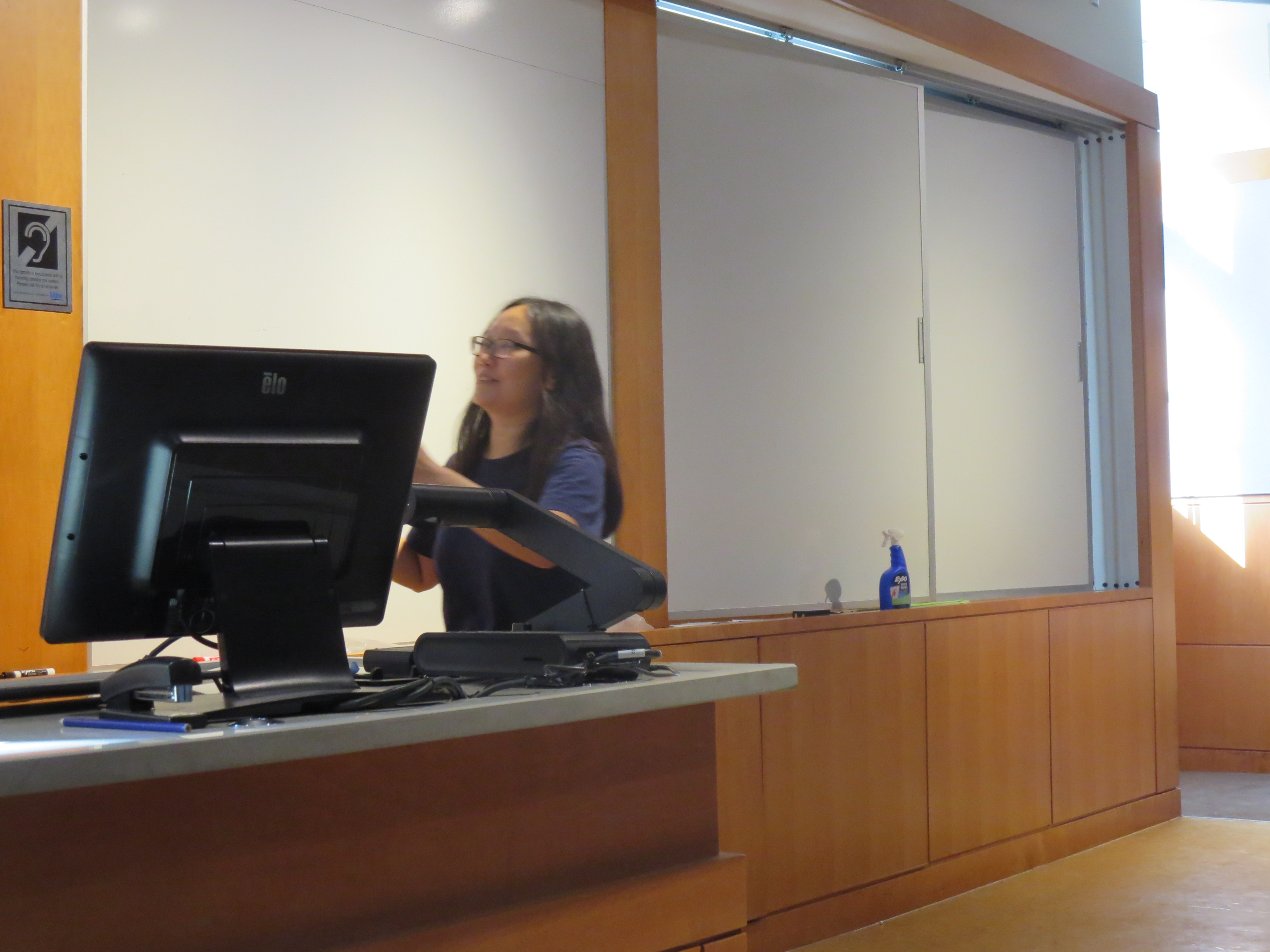
- photo,
photo
- 10:45 - 11:45: Victoria Martin (University of North Florida),
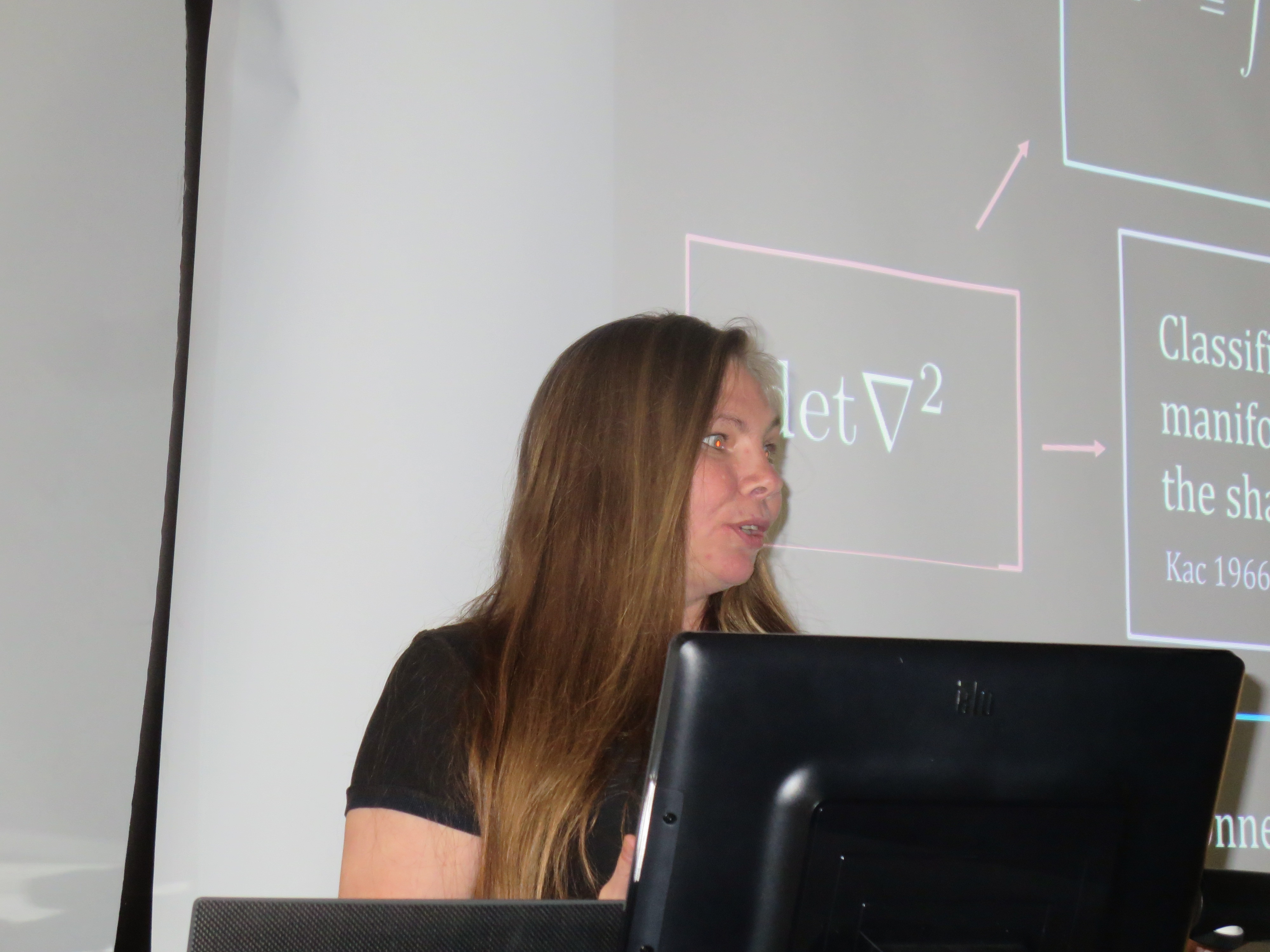
"1-loop partition functions from a generalized Selberg zeta function"
- Abstract: There is currently much interest in the mathematical and physical communities to uncover new relationships between black hole geometries and number theory. In this talk, we review a body of work whose physical goal is to easily and efficiently compute 1-loop partition functions of spin-s fields on a broad class of quotient spacetimes. We accomplish this by constructing an object called the generalized Selberg zeta function of a given quotient spacetime, and show that this zeta function is directly related to the regularized 1-loop scalar partition function on this background. Further, the zeros of this zeta function are mapped to the scalar field quasinormal modes. The specific geometries that we will consider are the BTZ black hole (inspired by the work of Perry and Williams), warped AdS black holes, flat space cosmologies and Lens spaces. The mathematical goal of this work is thus to demonstrate extensions of the traditional Selberg zeta function formalism beyond hyperbolic quotients. We will construct the generalized Selberg zeta function in 3 ways: 1) via the quotient group generators, 2) from representation theory, and 3) from the newly-proposed Wilson spool of Castro, Coman, Fliss and Zukowski.
- photo,
photo
- 12:00 - 1:30: Lunch
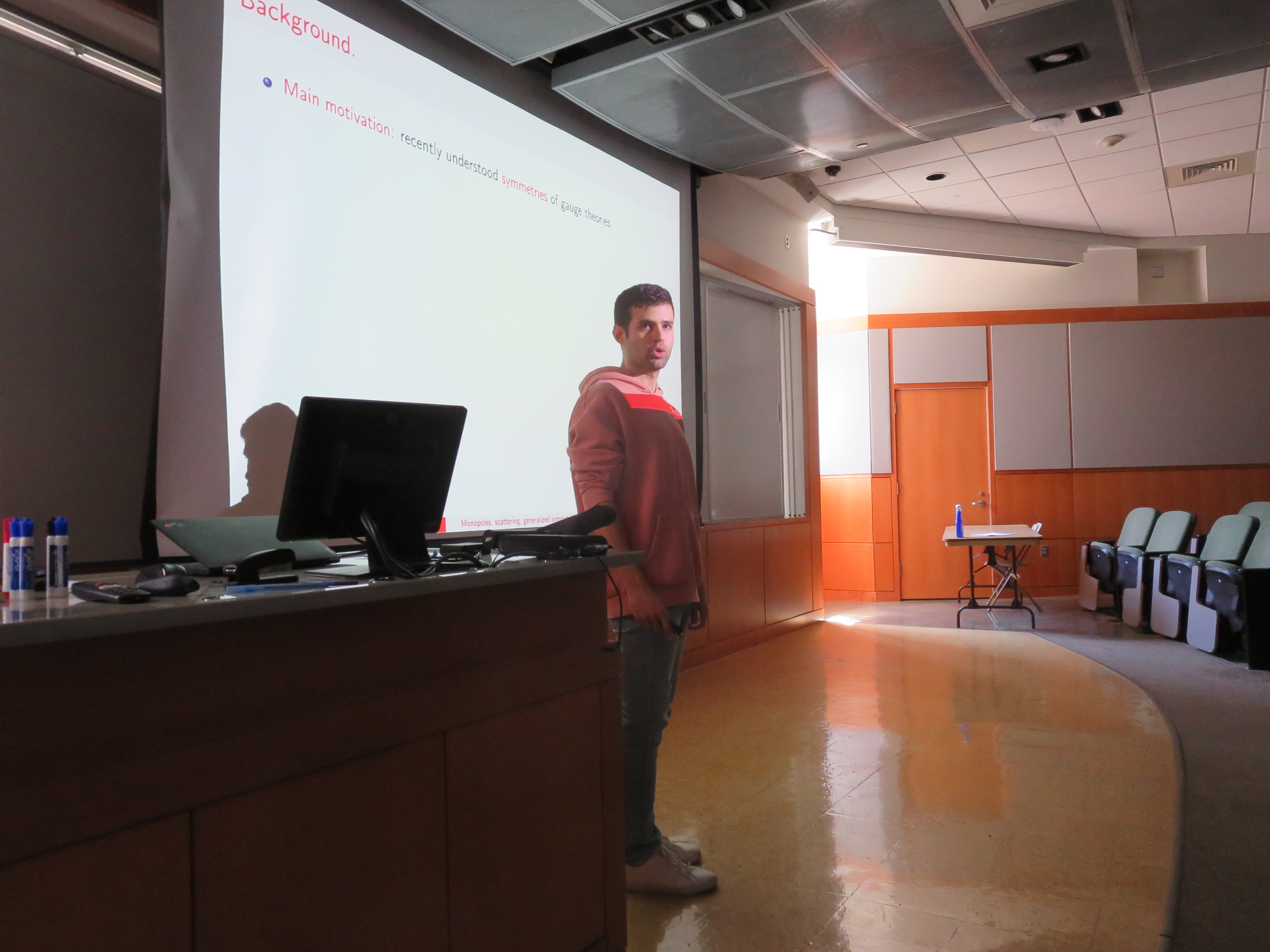
- 1:30 - 2:30: Diego Delmastro (Stony Brook),
"Monopoles, scattering, generalized symmetries."
- Abstract: Gauge theory is a very mature subject by now. Surprisingly, some of its symmetries have only been properly understood in the last couple of years. Specifically,
such theories typically have a very rich set of symmetries, involving modern notions such as higher-form symmetries, higher-group symmetries, and categorical symmetries. A proper understanding of these generalized symmetries is not really crucial if we are interested in scattering processes involving fundamental particles only, but it does become quite essential if we want to add monopoles into the mix.
In this talk I will review where these generalized symmetries come from, and how they impose constraints on scattering amplitudes of elementary particles against heavy monopoles. This will allow us to resolve a decades-old puzzle concerning such processes, where incoming electrons appear to become fractional particles after the scattering event.
- slides
- photo,
photo
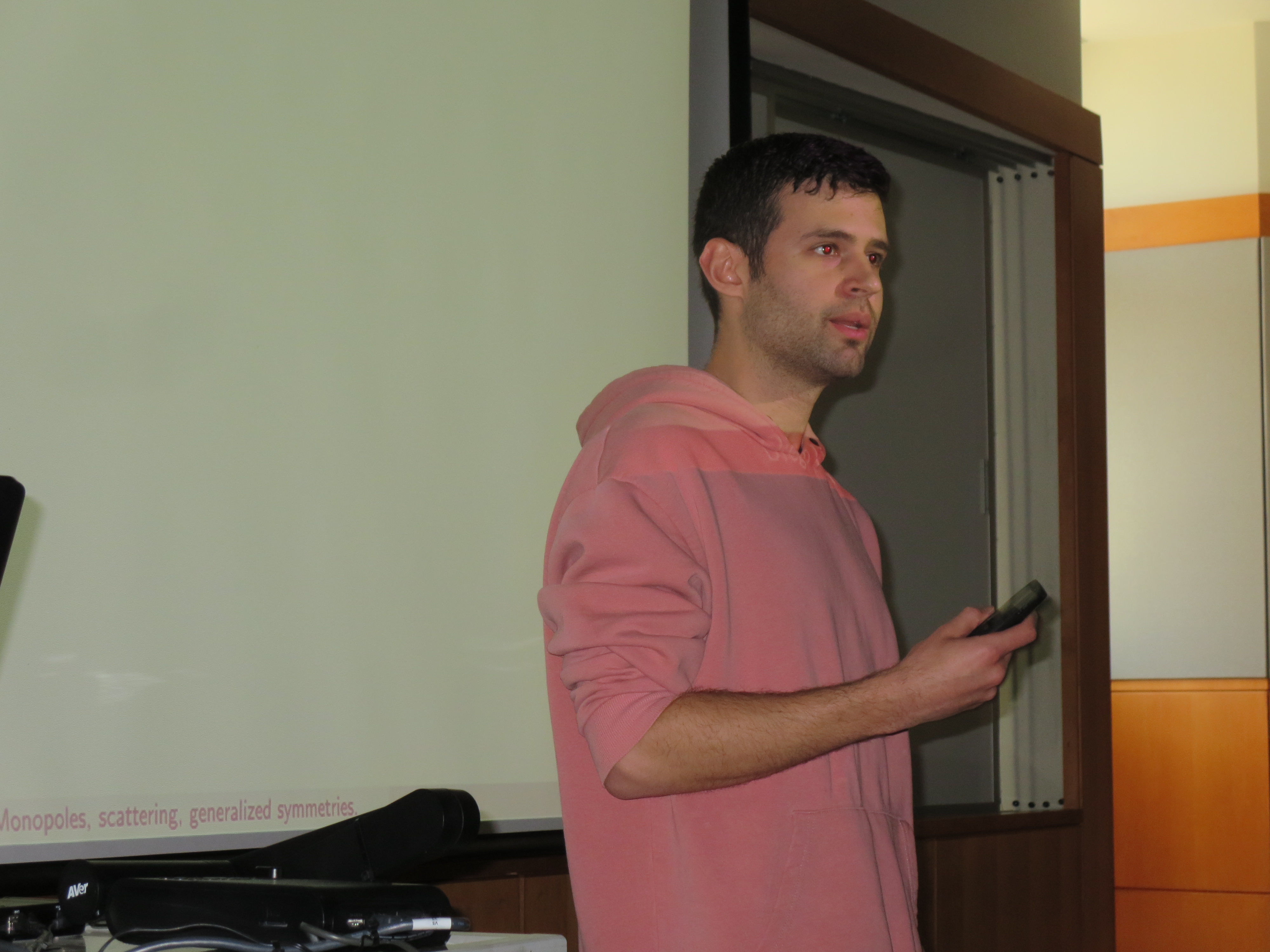
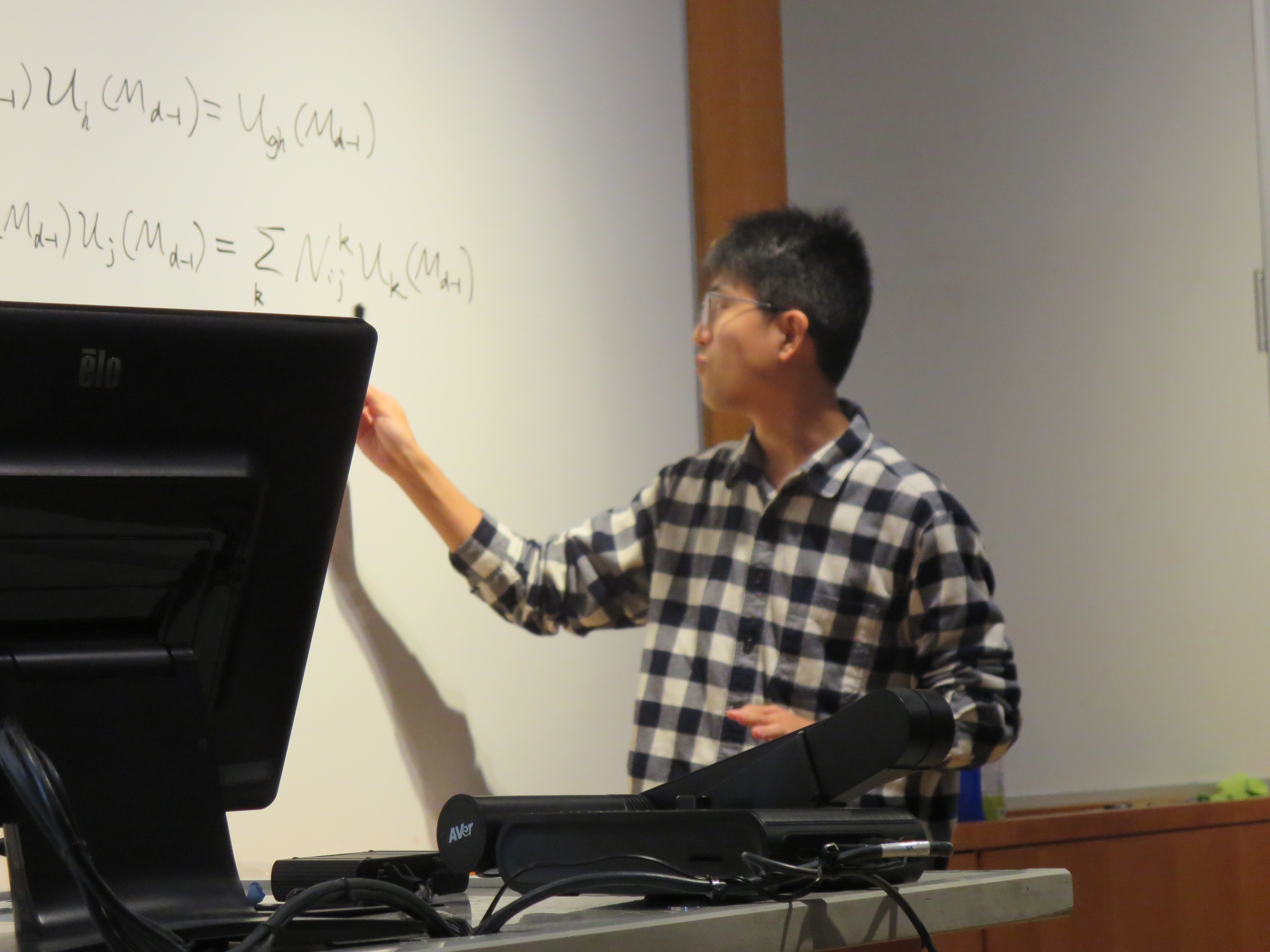
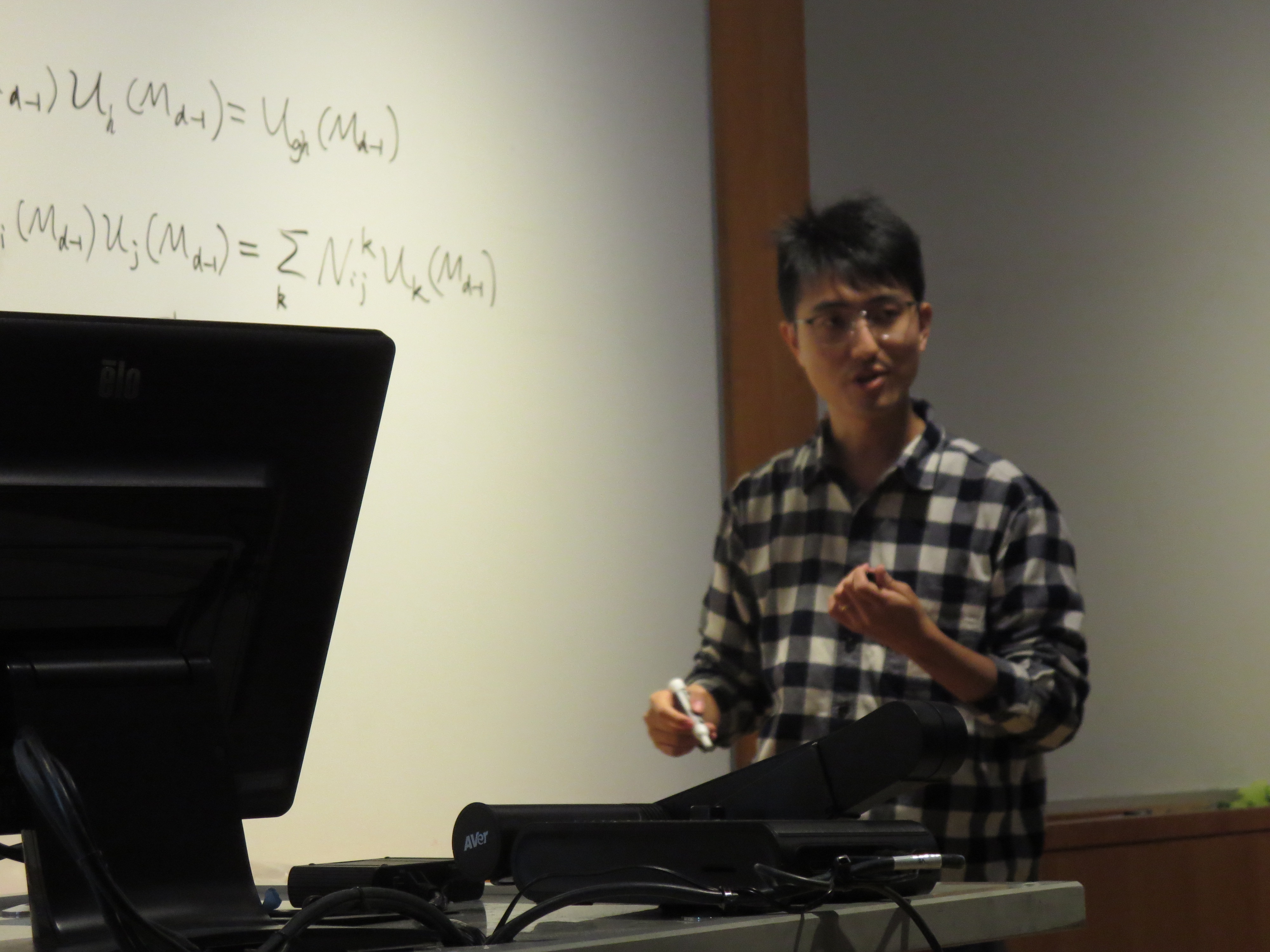
- 2:45 - 3:45: Xingyang Yu (VT),
"Stringy Approach to Categorical Symmetries"
- Abstract: Generalized global symmetries, including subtle non-group-like categorical symmetries, can be investigated via topological operators in quantum field theories (QFTs). The topological nature of these symmetries is a D-dimensional QFT, which can also be nicely captured by a (D+1)-dimensional TFT, known as the symmetry TFT (SymTFT). In this talk, I will focus on QFTs admitting string theory embeddings, and discuss generally how their categorical symmetries are engineered. The stringy construction consists of two main parts: On one hand, the SymTFT can be derived from the geometric (possibly with fluxes) data in string theory. On the other hand, the topological operators in the SymTFT, which generate various categorical symmetries, have elegantly brane origins in many cases. I’ll illustrate the idea with explicit examples.
- photo,
photo
- 4:30 - 5:30: Optional:
Carolina Skies show at the
Morehead Planetarium.
Anyone who wishes to attend is responsible for purchasing their own tickets.
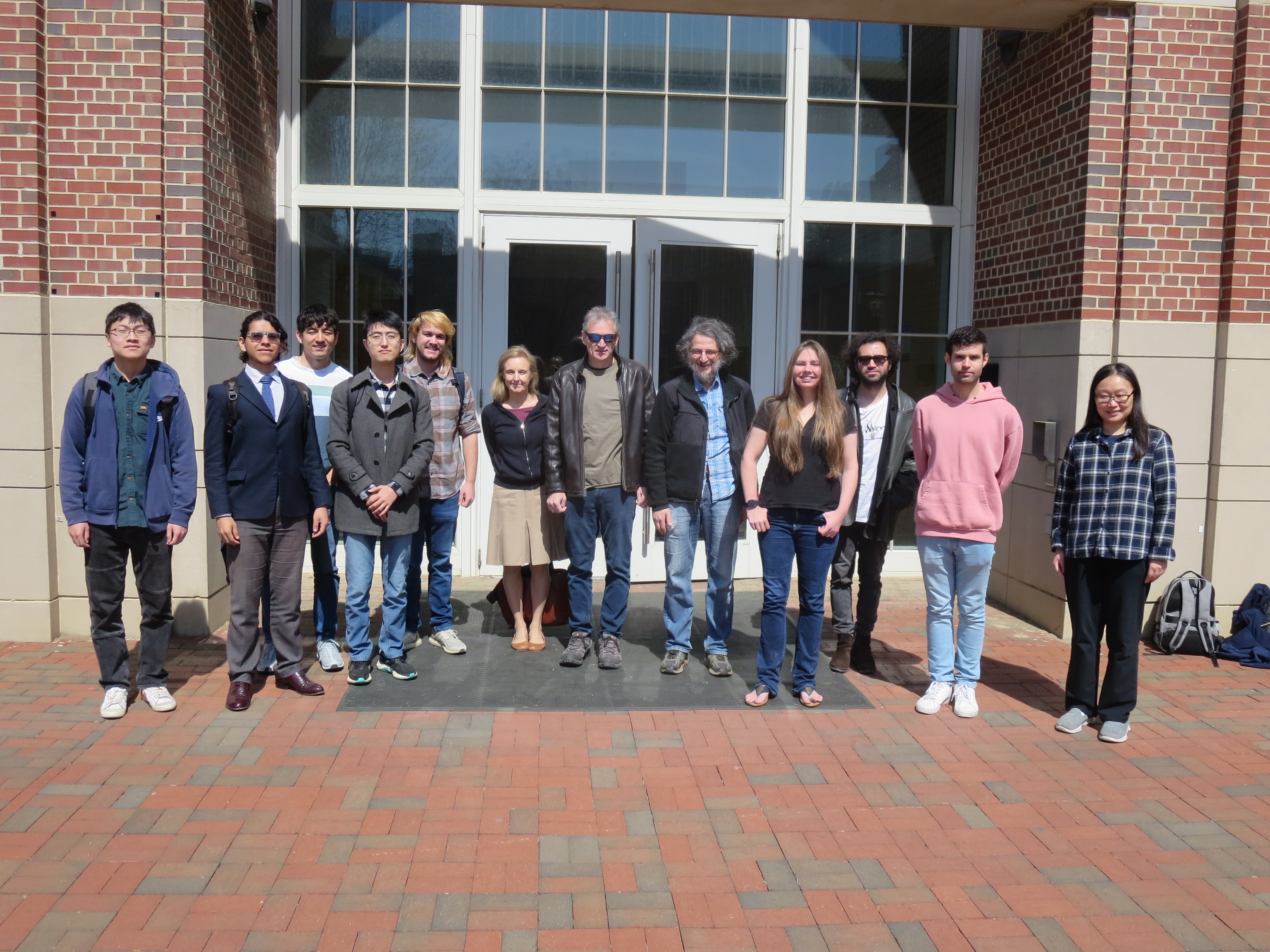
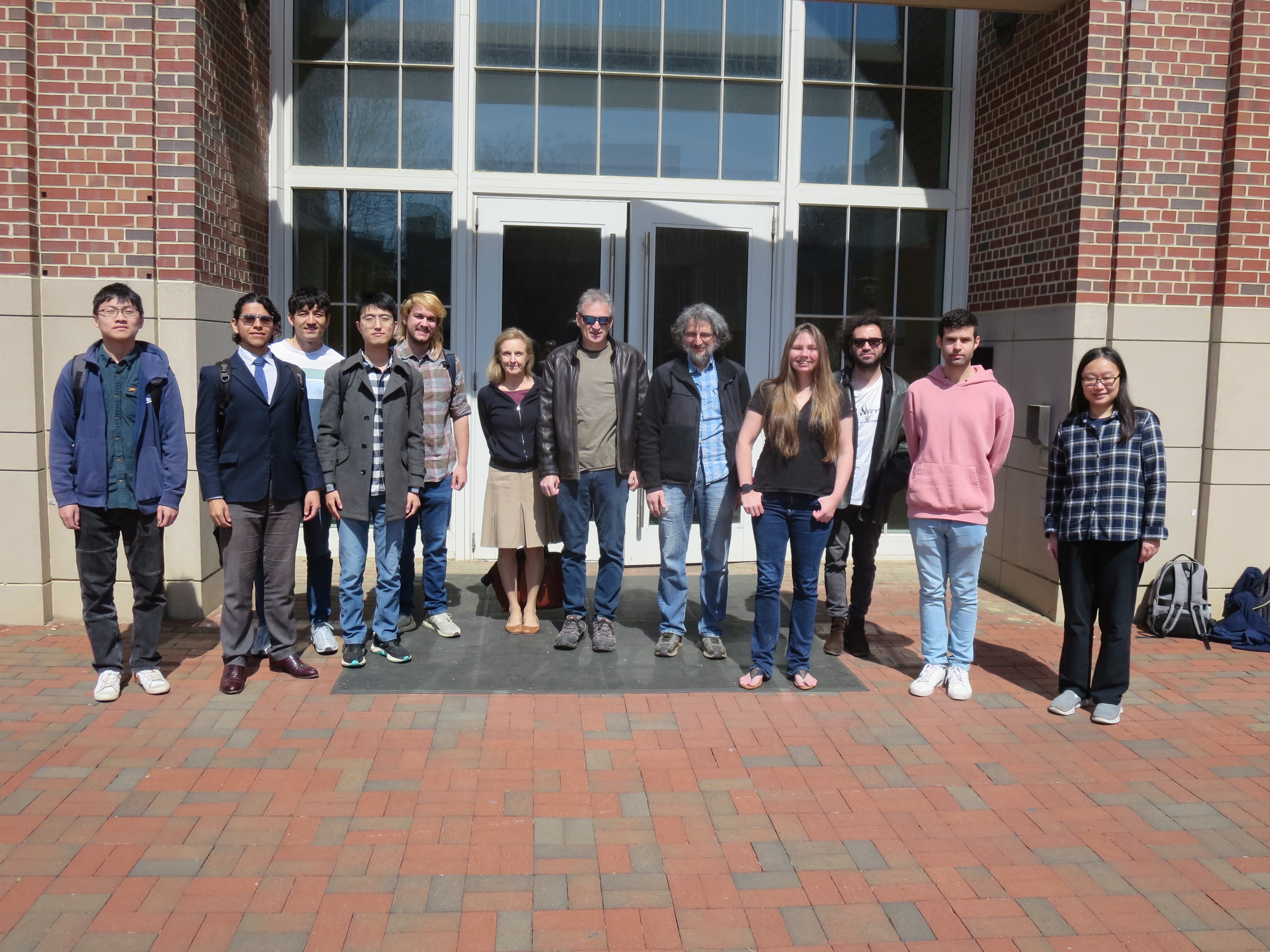
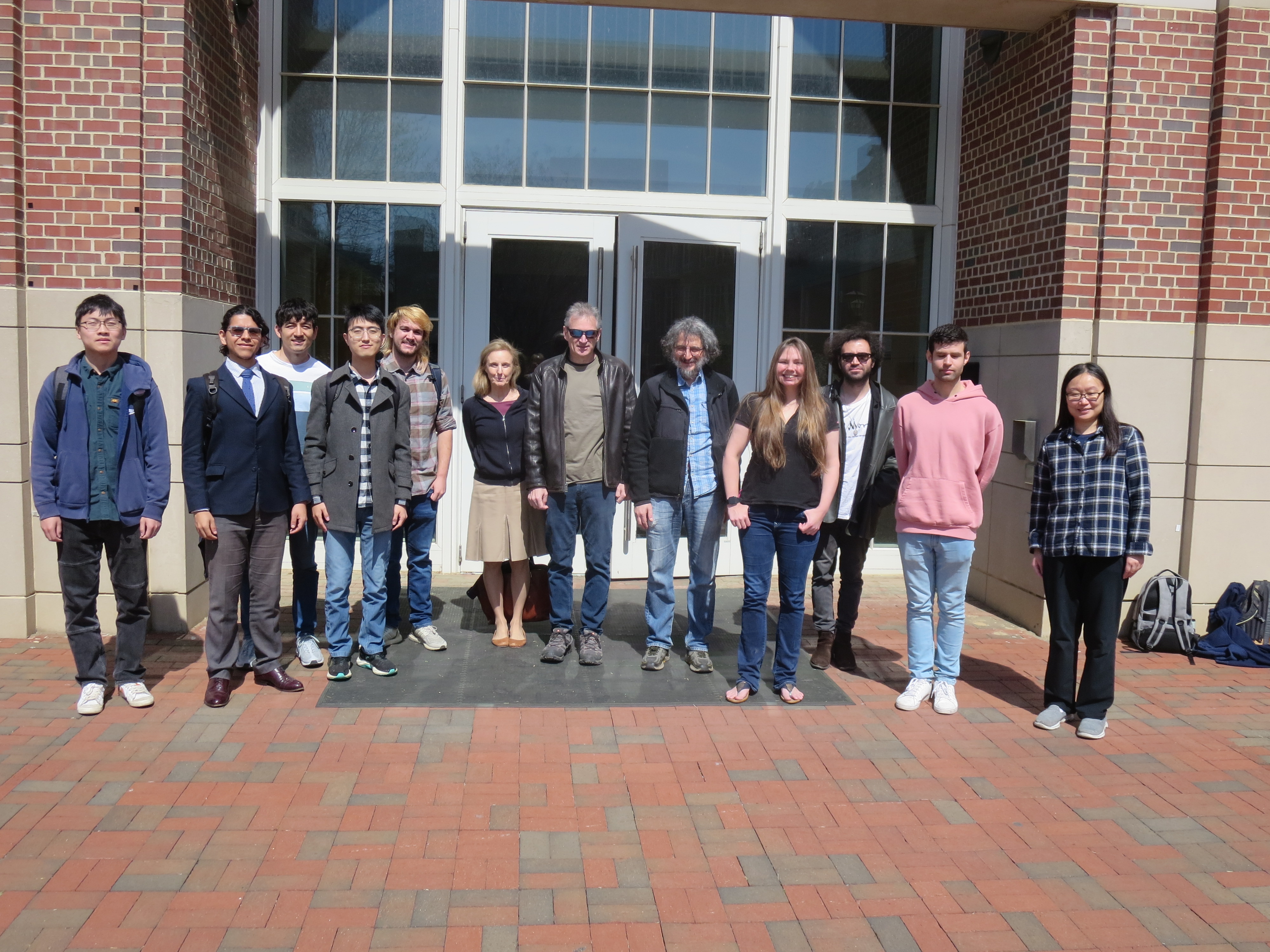
Group photos from the spring 2024 meeting are
here,
here,
here.
Discrimination / diversity:
The organizers of this meeting are committed to building a diverse,
welcoming, and inclusive research environment.
We support the non-discrimination statement of the AWM,
which can be found
here.
Any attendee or speaker is welcome to contact any of the organizers directly
if he or she feels harassed or excluded.
If you are an individual with a disability and desire an accommodation,
please contact Eric Sharpe (VT office phone 540-381-0185)
at least 10 business days prior to the event.
Parking at UNC
For parking in Chapel Hill, there are several municipal parking lots and
decks off of Rosemary St., parallel and next to Franklin St.,
see here.
Campus visitor parking is discussed
here.
Hotels at UNC
If you need a hotel, a few possibilites in the area include
- The Carolina Inn,
next to the physics department.
- Siena Hotel
- Aloft Chapel Hill,
located at 1001 South Hamilton Rd, Chapel Hill,
- Hampton Inn,
located at 6121 Farrington Rd, Chapel Hill,
- Sheraton Chapel Hill,
located at One Europa Drive, Chapel Hill,
- Tru by Hilton Chapel Hill,
located at 1742 Fordham Blvd, Chapel Hill,
- LaQuinta Inn and Suites,
located at 4414 Durham-Chapel Hill Blvd, Chapel Hill.
Coffee:
There are several coffee shops located close to the physics department:
- Caribou Coffee, 110 West Franklin Street
- Starbucks, 103 East Franklin Street
- Alpine Bagel Cafe, in the Carolina Union
For visitors to the area:
Funding:
We have (limited) funding available to reimburse students and postdocs,
both those speaking and those merely attending who,
because of distance travelled, need to spend
a night in a hotel,
courtesy of NSF grant PHY-2014086.
IMPORTANT: If you wish to be reimbursed, see here
for the paperwork you will need to provide, and also let Eric Sharpe
know that you will wish to be reimbursed.
Previous regional meetings:
For information on previous meetings, see here.
Other upcoming meetings of interest:
A list of upcoming events in VA can be found
here.
Chapel Hill area attractions:
For those not acquainted with the area, there are a number of things
to see. In no particular order, a few include:
- Morehead Planetarium
in Chapel Hill,
- There is a small
museum of NC history
on the UNC-CH campus.
- Nasher Museum of Art at Duke
University, open late on Thursday evenings,
- NC Museum of Art in Raleigh,
open late on Friday evenings,
- NC Museum of Natural Sciences,
- NC Museum of History
- Reader's Corner,
a used book store on Hillsborough St. in Raleigh,
- Nice
Price Books, another used book store on Hillsborough St. in Raleigh,
- Other Raleigh events held on the first Friday of every month are
listed here,
- Full Frame Documentary Film
Festival, held in April of each year.
- Events
in Chapel Hill are often listed
here.